
Skip to content
MAYFLOWER SPECIALTYMayflower Specialty

Company

About Mayflower Specialty

Mayflower Specialty is an AI liability insurance specialist that provides coverage for companies that build and deploy AI. It writes affirmative AI coverage for directors and officers liability (AI-D&O), employment practices liability (AI-EPL) and professional liability (AI-E&O), plus an AI DIC Excess layer over an existing program, on A- (Excellent) AM Best rated paper backed by some of the world's largest reinsurers. Coverage is placed through brokers and underwritten on the applicant's AI governance.

At a glance

Coverage
AI-D&O, AI-EPL, AI-E&O and AI DIC Excess
Paper
A- (Excellent) AM Best rated paper
Policy form
Claims made and reported
Distribution
Placed through brokers
Investors
Clocktower Ventures, Antler and industry angels

Our mission

Mayflower’s mission is to make AI an insurable risk for the companies that build and deploy it.

What Mayflower Does and Why It Exists

Mayflower exists because the liability policies most companies carry were written before AI began making and shaping decisions on their behalf. Many D&O, EPL and E&O wordings say nothing about AI, which leaves an AI claim to be argued over after the loss, and insurers have begun replacing that silence with explicit AI exclusions.

Mayflower takes the opposite position: it writes affirmative AI coverage that names the exposure and covers it on purpose, subject to the policy terms, either as a modular primary policy or as a difference-in-conditions layer over the program a company already carries. The aim is that a company adopting AI, and the board overseeing it, knows where it stands before a claim is made rather than after one.

Sources: Business Insurance, April 2026 (opens in a new tab); Hunton Andrews Kurth, May 2025 (opens in a new tab)

Capacity and security

How Mayflower Is Backed

Mayflower’s AI liability coverage is written on A- (Excellent) AM Best rated paper, backed by some of the world’s largest reinsurers and serviced by a specialist claims administrator. A new class of risk calls for the same security a board or a broker would expect of any liability policy, and that is the standard Mayflower holds its coverage to.

Paper and Rating

Policies are written on A- (Excellent) AM Best rated paper. AM Best places A and A- in its “Excellent” category, the second highest of its financial strength rating categories, and assigns it to insurers that have, in its opinion, “an excellent ability to meet their ongoing insurance obligations.”

Source: AM Best, Guide to Best’s Financial Strength Ratings (opens in a new tab)

Reinsurance

The coverage is backed by some of the world’s largest reinsurers. Their names are confidential and are not published on this site, so a board or broker that wants to discuss the security behind a placement should raise it with Mayflower directly.

Claims Handling

Claims are handled by a specialist claims administrator that understands how AI losses develop. The notice and reporting requirements a claim must meet are set out in each policy.

The Policy Form

Coverage is written on a claims made and reported basis, so a policy responds to claims first made against an insured during the policy period, or any extended reporting period, and reported as the policy requires. Defense costs reduce and may exhaust the limit of liability and are subject to the retention.

Underwriting

Underwritten on Your Governance

Mayflower underwrites each application on how the company actually runs its AI: how decisions are made, monitored, documented and escalated. The controls a company runs over its AI are the best available evidence of how likely an AI claim is and how well it could be defended, and the company already holds that evidence.

The application asks which governance frameworks a company follows, such as the NIST AI Risk Management Framework or ISO/IEC 42001, along with its oversight body, board reporting, testing and incident response. It also lists recommended documents, such as bias audit results and board minutes on AI oversight, and notes that they may improve terms, so documented governance can work in an applicant’s favor.

It is a good idea to assemble an AI system inventory and a written AI governance policy before applying, because both are required documents and having them ready can reduce follow-up questions.

What the application covers

  1. Applicant information
  2. AI systems overview
  3. AI governance
  4. Data governance
  5. System operations and monitoring
  6. AI incident response
  7. Regulatory environment and compliance
  8. Claims and loss history
  9. Prior and current insurance
  10. Required documentation

The questions themselves stay inside the application, which is licensed to applicants. The broker kit explains why underwriting asks each section.

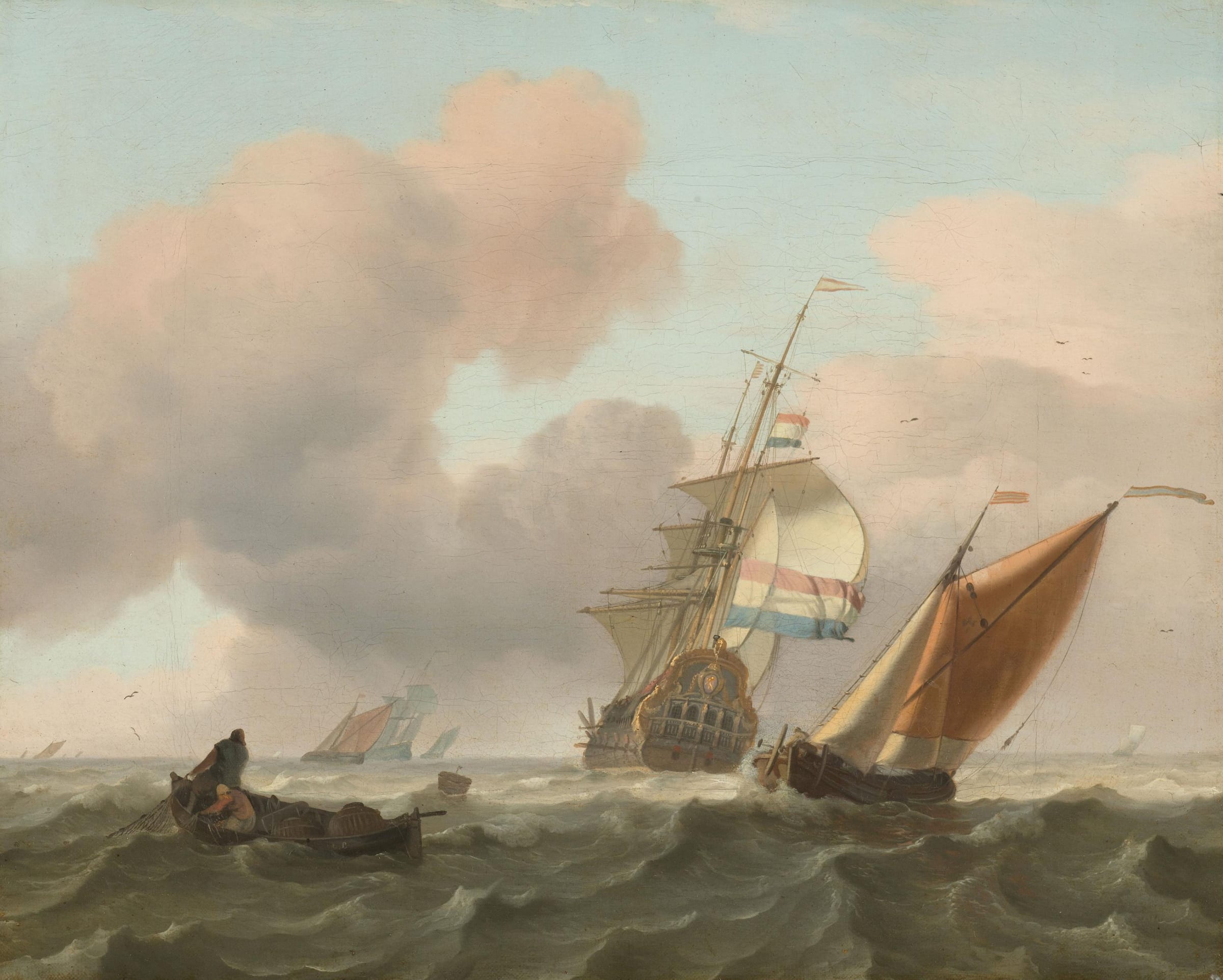
A Dutch ship and a small sailing boat holding their course through choppy gray-green waves beneath a pink and blue sky.

What the name stands for

Stable, Solid, Reliable and Brave

The company is named for a ship, and the four qualities it holds itself to are the ones a crew would want in a ship before a long voyage. Each describes how Mayflower intends to behave toward the companies and brokers it works with.

  1. Stable

    Underwriting decisions rest on evidence about how a company governs its AI rather than on the latest headline about AI, so terms reflect the risk in front of the underwriter.

  2. Solid

    Coverage is written on A- (Excellent) AM Best rated paper and backed by some of the world’s largest reinsurers, which is the security a board should expect before it relies on a new line of coverage.

  3. Reliable

    Mayflower’s coverage is affirmative: it names AI exposure and covers it on purpose, subject to the policy terms, so a company is not left relying on the silence of a wording written before AI.

  4. Brave

    Mayflower has chosen to write AI liability while a number of insurers are adding AI exclusions to their forms, because the companies building and deploying AI still need somewhere to transfer that risk.

Each of these can be tested: the paper, the policy form and the application are all set out on this site, and the coverage pages describe what each module is written for.

Team

Leadership and Advisors

Mayflower is led by its founder and CEO, Jeremy Epstein, with advice from Aman Raghuvanshi, who co-founded an AI platform for insurance agencies and carriers.

Portrait of Jeremy Epstein

Founder and CEO

Jeremy Epstein

  • Formerly American Family Ventures
  • Formerly Nationwide
  • PLUS Emerging Leader nominee

Jeremy Epstein is the founder and CEO of Mayflower Specialty. His career sits where venture capital, insurance, fintech and AI meet, and he is building Mayflower so that companies that build and deploy AI can buy coverage written for the liability it creates.

Before Mayflower, Jeremy was an investor at American Family Ventures, an insurance-focused venture capital fund, where he invested over $100 million across fintech, cyber and insurtech companies. He executed investments and sat as a board observer at high-growth portfolio companies, advising them as they scaled. Earlier, at Nationwide, he led innovation initiatives and launched new businesses in blockchain, renewable energy and insurtech.

The Professional Liability Underwriting Society (PLUS) recognized Jeremy as an Emerging Leader nominee. He speaks at industry conferences on AI liability, digital transformation in financial services and venture investing, and he advises early-stage companies on growth, risk management and innovation.

Portrait of Aman Raghuvanshi

Advisor

Aman Raghuvanshi

  • Director of AI, Waylin Partners
  • Co-founder, Mulligan (YC W23)
  • Claremont McKenna College

Aman Raghuvanshi is Director of AI at Waylin Partners, where he deploys AI at private equity-backed companies. He is the co-founder and former CEO of Mulligan (Y Combinator, W23), an AI platform for insurance agencies and carriers that was acquired by Prestige Trucking Insurance and rebranded as Insure Stack. Aman studied computer science at Claremont McKenna College.

Investors

Who Has Invested

Mayflower has raised funding from Clocktower Ventures, Antler and angel investors from the insurance and financial services industry.

Venture capital

Clocktower Ventures

Venture capital

Antler

Angel investors

From the insurance and financial services industry

Recognition

Recognition and Memberships

Mayflower was selected for the FinTech Innovation Lab New York’s 2026 class, one of 11 companies chosen for the program.

Diligence

Questions About Mayflower

Short answers for buyers, boards and brokers doing diligence on a new AI liability provider.

Email jeremy@mayflowerspecialty.com

Who founded Mayflower Specialty?

Jeremy Epstein founded Mayflower Specialty and is its CEO. He was previously an investor at American Family Ventures, where he invested over $100 million across fintech, cyber and insurtech companies, and before that he led innovation initiatives at Nationwide. Aman Raghuvanshi, Director of AI at Waylin Partners and co-founder of Mulligan, advises the company.

Who stands behind Mayflower’s policies?

Mayflower’s coverage is written on A- (Excellent) AM Best rated paper and backed by some of the world’s largest reinsurers, whose names are confidential. Claims are handled by a specialist claims administrator that understands how AI losses develop, and every policy is written on a claims made and reported basis.

What does A- (Excellent) mean?

A- is a Best’s Financial Strength Rating in AM Best’s “Excellent” category, which covers A and A- and sits below only the “Superior” category. AM Best assigns it to insurers that have, in its opinion, an excellent ability to meet their ongoing insurance obligations. The rating describes the financial strength behind the paper rather than the terms of any one policy.

Who has invested in Mayflower Specialty?

Mayflower Specialty has raised funding from Clocktower Ventures, Antler and angel investors from the insurance and financial services industry. The company was also selected for the FinTech Innovation Lab New York’s 2026 class, a 12-week program founded and run by Accenture and the Partnership Fund for New York City.

How do I buy coverage from Mayflower?

Mayflower’s coverage is placed through brokers. A company or its broker can complete the application online or download the supplemental application as a PDF, and Mayflower’s underwriting team responds within 48 hours. Completing the application does not bind coverage, and the information submitted is held in confidence.

Work with Mayflower

Start With the Application or a Conversation

The online application asks the same questions as the supplemental application, saves your progress and can be completed by a company or its broker. Underwriting responds within 48 hours, and if you would rather talk first, a short message reaches the team directly.

Completing the application does not bind coverage.